Does Dental Implant Surgery Hurt? Pain Control in Korea
One of the most common questions patients ask before getting implants in Seoul, South Korea is simple:
“Will it hurt?”
The short answer is: dental implant surgery in Korea is usually not painful during the procedure, and post-surgery discomfort is generally mild to moderate and well controlled.
Here’s what patients realistically experience—and how Korean clinics manage pain at every stage.
During Dental Implant Surgery: Is There Pain?
Local Anesthesia (Standard)
Most implant surgeries in Korea are done under local anesthesia, similar to fillings or tooth extractions.
What patients feel:
- Pressure or vibration
- No sharp pain
- Full numbness during surgery
Pain during the procedure itself is rare when anesthesia is properly administered.
Sedation & Sleep Dentistry (Optional)
For anxious patients or longer procedures, many Korean clinics offer:
- Conscious sedation
- IV sedation (“sleep dentistry”)
With sedation:
- You remain relaxed or semi-asleep
- Anxiety and awareness are significantly reduced
- Memory of the procedure may be minimal
This option is commonly chosen by:
- Nervous patients
- Those receiving multiple implants
- Patients with past dental trauma
After Surgery: What Does Implant Pain Feel Like?
After anesthesia wears off, most patients describe:
- Mild soreness
- Dull pressure
- Swelling similar to a wisdom tooth extraction
Pain levels are typically much lower than expected.
Typical pain timeline
- Day 1–2: Mild to moderate discomfort, swelling peaks
- Day 3–5: Pain decreases significantly
- After 1 week: Most patients feel close to normal
Severe or sharp pain is not typical and should be checked.
How Korean Clinics Control Pain After Surgery
Medication Protocols
Dentists in Korea usually prescribe:
- Anti-inflammatory pain relievers
- Short-term antibiotics (if needed)
- Swelling control medication
Strong painkillers are rarely necessary for routine implant cases.
Minimally Invasive Techniques
Korean implant dentistry emphasizes:
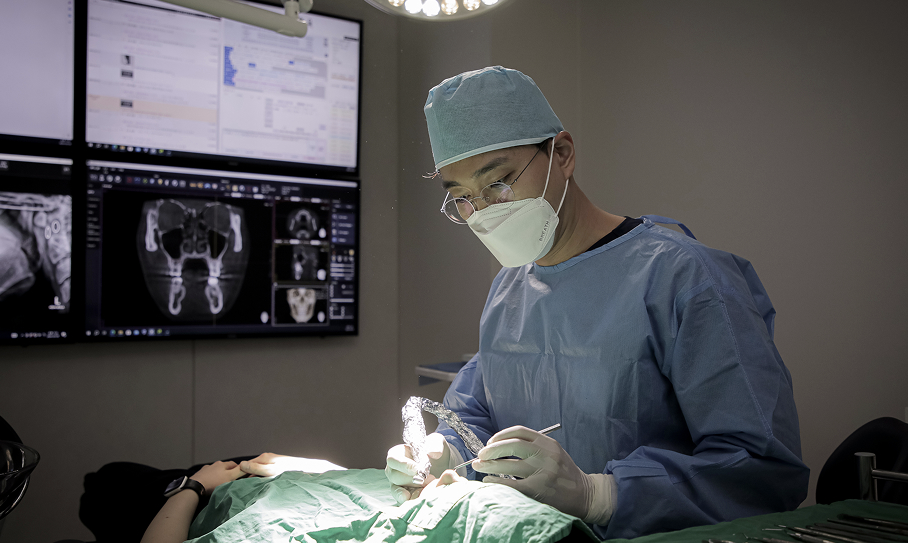
- Digital guided surgery
- Smaller incisions
- Precise implant placement
This leads to:
- Less tissue trauma
- Reduced swelling
- Faster recovery
Pain is often less than traditional manual surgery.
Post-Op Care & Follow-Up
Clinics provide:
- Detailed aftercare instructions
- Follow-up visits to check healing
- Bite adjustments if discomfort appears
Early follow-up helps prevent pain from lingering issues.
Factors That Can Increase Discomfort
Some cases may involve more soreness, including:
- Bone grafting
- Sinus lift procedures
- Multiple implants in one session
Even in these cases, pain is usually manageable with medication and improves steadily.
Common Myths About Implant Pain
“Implants hurt more than tooth extraction”
False. Many patients report implants are less painful than wisdom tooth removal.
“You’ll feel drilling into bone”
You may feel vibration, but no pain due to anesthesia.
“Recovery is unbearable”
Most patients return to normal activities within a few days.
Pain vs Fear: What Patients Often Say After Surgery
Many patients report:
- “It was easier than I expected.”
- “The anticipation was worse than the surgery.”
- “I didn’t need strong painkillers.”
This is especially common in Korean clinics due to standardized pain-control protocols.
When Pain Is NOT Normal
Contact your clinic if you experience:
- Severe pain that worsens after day 3–4
- Persistent swelling or pus
- Fever
- Sharp pain when biting
These signs are uncommon but should be addressed early.
Final Thoughts
Dental implant surgery in Korea is designed to be comfortable, controlled, and minimally painful. With proper anesthesia, optional sedation, and careful surgical technique, most patients experience far less discomfort than they expect.
If pain control is a major concern, Korean clinics are well equipped to tailor anesthesia and sedation options to your comfort level—making implant surgery a far less intimidating experience than many imagine.